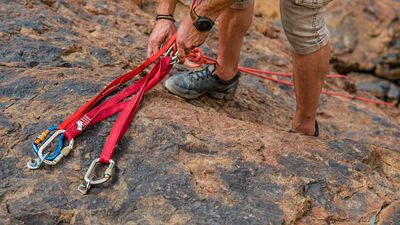
Aid climbing is a form of climbing that requires the use of specialized equipment and techniques to ascend a rock or wall. It is used mainly for big wall climbs, but can also be used for other types of climbing. Aid climbing is often seen as an intimidating and dangerous form of climbing, but with proper preparation and technique, it can be an enjoyable and rewarding experience.

Before attempting an aid climb, it is important to assess the difficulty of the route and make sure you have the necessary equipment and safety gear. This includes a harness, a helmet, and appropriate shoes. You should also have plenty of protection such as cams, nuts, and slings. It is also helpful to have a partner to help with the climbing and belaying.
When beginning an aid climb, it is important to establish an anchor point. This is usually done by setting a few pieces of protection in the rock. Once the anchor is in place, one climber can tie into the anchor and be lowered down from the top. The other climber can then ascend the face, placing protection as they go. When aid climbing, it is important to use the proper technique. This means keeping the body close to the wall and using the arms and legs to move up the face. It is also important to use your feet to “step-up” on the rock, rather than pulling on gear. It is also important to pay attention to hand and footholds, and make sure they are secure before using them.

Once at the top of the climb, the climbers can rappel down the route. This can be done by tying off an anchor point and rappelling off of it. It is important to use the right technique when rappelling, as it can be dangerous if done incorrectly. Aid climbing is a great way to challenge yourself and experience the thrill of big wall climbing. With the right technique and safety gear, it can be an enjoyable and rewarding experience. Just make sure to take the time to learn the basics and assess the difficulty of the route before attempting an aid climb.


